
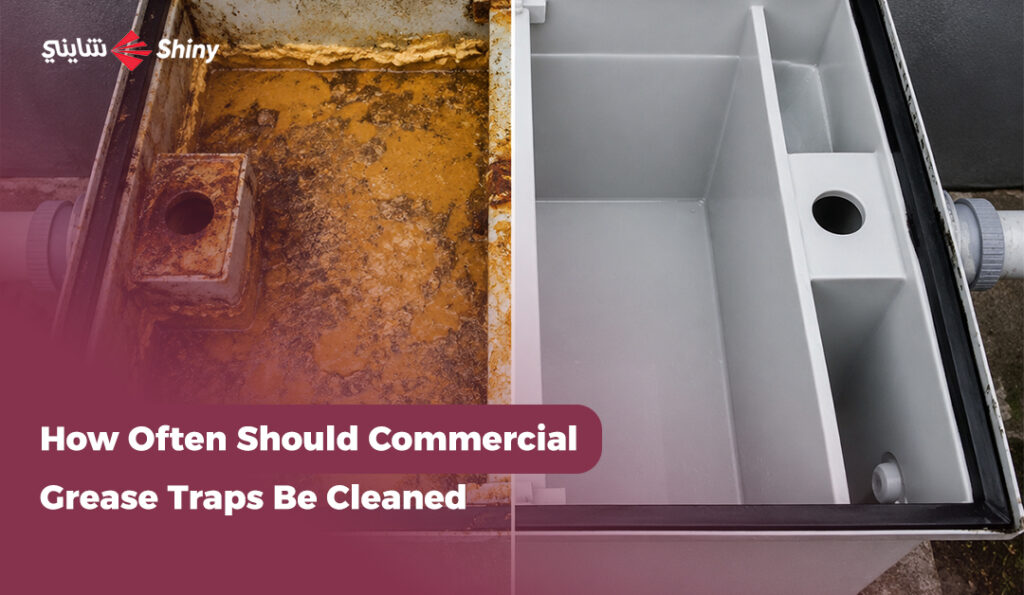
Grease traps play an essential role in commercial kitchens by separating fats, oils, and grease from wastewater before they enter the drainage system. For restaurants, hotels, cafés, and other food service facilities in Saudi Arabia, regular grease trap cleaning helps prevent blocked drains, unpleasant odors, wastewater backups, and costly operational disruptions.
But how often should commercial grease traps be cleaned?
The answer depends on kitchen activity, the amount of grease produced, the size of the grease trap, and the rate at which it fills. A busy restaurant may require more frequent cleaning than a small café with limited food preparation.
Understanding the right cleaning schedule helps businesses maintain reliable drainage, support kitchen hygiene, and reduce unexpected maintenance costs. In this guide, Shinny explains the factors that determine grease trap cleaning frequency, the warning signs to watch for, and when professional maintenance may be the right choice.
How Often Should Commercial Grease Traps Be Cleaned?
There is no single cleaning interval suitable for every commercial kitchen. The correct schedule should be based on actual grease accumulation, the equipment manufacturer’s instructions, applicable local requirements, and the recommendations of a qualified service provider.
As a starting point, businesses can use the following general planning guide.
| Type of Facility | Suggested Starting Point |
| High-volume restaurants | Inspect frequently and assess whether weekly or more frequent cleaning is necessary |
| Medium-sized restaurants | Monitor grease accumulation and establish a regular cleaning schedule |
| Small cafés | Set the schedule according to food preparation volume and actual grease buildup |
| Hotel kitchens and central kitchens | Use a documented maintenance plan based on operating hours and wastewater load |
| Commercial kitchens with recurring blockages | Arrange a professional inspection and reassess cleaning frequency |
These are planning suggestions, not universal regulatory intervals. The appropriate frequency should be confirmed through inspections and the requirements applicable to the facility.
A grease trap that fills quickly should be cleaned more often. Waiting until a blockage or overflow occurs can turn routine maintenance into an expensive emergency.
What Is a Commercial Grease Trap and How Does It Work?
A commercial grease trap is a plumbing device designed to separate fats, oils, grease, and food particles from wastewater generated during food preparation and dishwashing.
When wastewater enters the device, its flow slows down. Grease and oils separate from the water and rise to the surface, while heavier food solids settle at the bottom. The remaining water continues through the drainage system.
Over time, the trapped grease and solids accumulate. If they are not removed, the device may lose its effectiveness and allow grease to pass into downstream pipes.
Grease Trap vs. Grease Interceptor
The terms Grease Trap and Grease Interceptor are sometimes used interchangeably, but they can refer to different types and sizes of grease-control equipment.
Smaller grease traps are often installed close to kitchen fixtures, while larger grease interceptors may be installed outdoors or underground to serve a larger kitchen.
The cleaning method and service frequency depend on the equipment design, capacity, accessibility, and the volume of grease entering the system.
Five Signs Your Grease Trap Needs Cleaning
Waiting for a drainage emergency is not a reliable maintenance strategy. Recognizing early warning signs can help restaurants arrange cleaning before the problem affects daily operations.
1. Persistent Unpleasant Odors
A strong, lingering smell near kitchen sinks, floor drains, or the grease trap may indicate accumulated organic waste and grease.
Although odors can have several causes, persistent smells should prompt an inspection of the grease trap and surrounding drainage system.
2. Slow-Draining Sinks
If water takes longer than usual to drain from kitchen sinks, grease accumulation or a blockage may be restricting wastewater flow.
Cleaning the grease trap may help if the buildup is inside the device. If the problem continues, the connected pipes may also need inspection.
3. Frequent Drain Blockages
Repeated blockages can indicate that grease is escaping the trap or accumulating in downstream plumbing.
Professional inspection can help identify whether the cause is an overdue cleaning schedule, an equipment issue, incorrect sizing, or a separate pipe blockage.
4. Visible Grease Accumulation
A grease trap that contains substantial layers of fats, oils, grease, or food solids may no longer be operating effectively.
Do not rely on appearance alone. The accumulated material should be assessed against the manufacturer’s instructions and any applicable maintenance requirements.
5. Wastewater Backups or Overflow
Wastewater backing up into sinks or other kitchen areas is a serious warning sign that requires prompt attention.
Stop using affected fixtures when necessary and arrange a qualified inspection. If wastewater is overflowing, follow appropriate hygiene and cleanup procedures to protect employees and food preparation areas.
What Determines Grease Trap Cleaning Frequency?
The best maintenance schedule is based on how quickly the equipment accumulates grease and solids, rather than simply choosing the same interval for every business.
Kitchen Activity and Food Preparation Volume
Restaurants that fry food, grill meat, prepare large quantities of meals, or operate throughout the day may generate more fats, oils, and grease than establishments with limited food preparation.
A high-volume kitchen may therefore require more frequent cleaning and inspection.
Grease Trap Size and Capacity
A small unit serving several busy sinks may fill faster than a larger interceptor serving the same type of kitchen.
Correct equipment sizing matters. If the device repeatedly reaches capacity too quickly, a qualified professional can assess whether its size and configuration suit the kitchen’s wastewater load.
Operating Hours
Restaurants with extended opening hours, hotel kitchens, catering operations, and central kitchens may produce wastewater for longer periods.
Maintenance plans should account for peak operating periods, seasonal demand, and changes in food production.
Kitchen Waste Management Practices
Good daily practices can reduce the amount of grease entering the drainage system. Staff should scrape food scraps into suitable waste containers, collect used cooking oil separately, and avoid pouring fats or oils directly into sinks.
These measures can reduce unnecessary grease accumulation, but they do not eliminate the need for regular grease trap cleaning.
Local Requirements and Equipment Instructions
Commercial kitchens in Saudi Arabia should check the municipal requirements applicable to their activity, along with relevant Saudi Building Code provisions and the equipment manufacturer’s maintenance instructions. The Ministry of Municipalities and Housing publishes requirements for food establishments, including provisions related to drainage systems.
وزارة البلديات والإسكان
+1
Requirements can differ by location, facility type, and applicable regulations. Do not assume that a cleaning interval used in another country automatically applies to your business in Saudi Arabia.
What Happens During Professional Grease Trap Cleaning?
Professional service helps businesses remove accumulated waste safely and assess whether the equipment needs additional attention.
The precise process varies according to the type of grease trap, its location, and the service agreement.
Step 1: Inspection
The technician checks the unit’s condition, accessibility, accumulated material, and any visible signs of damage or drainage problems.
Step 2: Removal of Grease and Food Solids
Accumulated fats, oils, grease, and food solids are removed using a method appropriate for the equipment.
For units requiring pumping, a suitable vacuum or pumping system may be used.
Step 3: Cleaning and Component Checks
Accessible internal surfaces and relevant components are cleaned as appropriate. The technician may also check covers, seals, inlet and outlet areas, and visible signs of leakage or damage.
Step 4: Reassembly and Operational Checks
After cleaning, the unit is reassembled correctly and checked for obvious operational issues. Any problems that require plumbing repairs or further inspection should be documented.
Step 5: Service Records and Recommendations
A maintenance record can include the service date, work completed, observed condition, and recommended next service date.
Keeping these records helps managers identify recurring problems and adjust the maintenance schedule based on actual grease accumulation.
Why Regular Grease Trap Maintenance Matters for Restaurants
Reduce the Risk of Drainage Problems
Removing accumulated grease helps the device perform its intended function and reduces the risk of grease-related blockages in connected drainage systems.
However, cleaning cannot guarantee that every blockage will be prevented, particularly if the pipes have existing damage or other obstructions.
Maintain a Cleaner Kitchen Environment
Grease accumulation and decomposing food waste can contribute to unpleasant odors and unsanitary conditions around affected equipment.
A planned maintenance schedule helps businesses address these problems before they disrupt the kitchen environment.
Support More Predictable Maintenance Costs
Emergency drainage work can interrupt food preparation and require urgent intervention.
Scheduled cleaning makes maintenance easier to plan and can help businesses identify developing issues before they become more disruptive.
Protect Daily Operations
For restaurants, hotels, and cafés, drainage problems can affect employees, customers, and kitchen productivity.
Regular maintenance supports operational continuity by reducing the likelihood of avoidable grease-related disruptions.
How to Choose a Commercial Grease Trap Cleaning Company in Saudi Arabia
Selecting a suitable service provider is about more than finding the lowest price. Businesses should consider the quality, scope, and documentation of the service.
Look for a provider that offers:
- Commercial experience: Experience working with restaurant kitchens, hotels, cafés, and other food service facilities.
- A clear service scope: Confirmation of whether the service includes inspection, grease removal, pumping where required, and cleaning.
- Appropriate equipment: Methods and equipment suited to the size, type, and location of the grease trap.
- Responsible waste handling: Clear procedures for collecting, transporting, and disposing of removed grease and wastewater in accordance with applicable requirements.
- Maintenance recommendations: A practical service schedule based on the unit’s condition and actual grease accumulation.
- Documented work: A service record that helps the business track maintenance and plan future appointments.
Before booking, explain your kitchen’s operating hours, the number of food preparation areas, any recurring drainage issues, and the type of grease trap installed. This information helps the provider assess the scope of work more accurately.
Keep Your Commercial Kitchen Running with Shinny
A reliable grease trap maintenance plan helps restaurants and other food service businesses manage grease accumulation, reduce avoidable drainage disruptions, and maintain a cleaner working environment.
Shinny supports commercial facilities looking for professional cleaning and maintenance solutions. If your kitchen is experiencing slow drainage, recurring odors, or frequent grease buildup, arranging an assessment is a practical first step toward determining the right maintenance schedule.
Contact Shinny to discuss your commercial kitchen cleaning and maintenance requirements in Saudi Arabia. Share your facility type, operating hours, and current drainage concerns to help determine the appropriate service for your needs.
Frequently Asked Questions (FAQ)
1. How often should a commercial grease trap be cleaned?
The frequency depends on the trap’s size, kitchen activity, grease accumulation, and applicable requirements. Inspect the unit regularly and establish a schedule based on its condition and the manufacturer’s instructions.
2. What are the signs that a grease trap needs cleaning?
Common warning signs include persistent odors, slow-draining sinks, recurring blockages, visible grease buildup, and wastewater backups. These symptoms may also indicate other plumbing problems, so inspection is important.
3. What is the difference between grease trap cleaning and grease trap pumping?
Grease trap cleaning involves removing accumulated grease and food solids and, where appropriate, cleaning accessible internal surfaces. Grease trap pumping specifically refers to extracting accumulated liquid and waste using suitable pumping equipment. The exact service scope depends on the unit and provider.
4. Can restaurants clean grease traps themselves?
Some businesses may be able to perform routine maintenance on suitable equipment, provided they follow the manufacturer’s instructions and applicable requirements. Larger or difficult-to-access units may require professional equipment and trained personnel.
5. What happens if a grease trap is not cleaned regularly?
Excessive accumulation can reduce its effectiveness and contribute to odors, drainage blockages, and wastewater backups. Neglected equipment may also require more extensive maintenance.
6. Does grease trap cleaning help prevent blocked drains?
It can reduce the amount of grease escaping into connected pipes. However, blockages caused by damaged pipes, foreign objects, or existing buildup may require separate plumbing work.
7. How can a restaurant choose the right grease trap cleaning service?
Choose a provider with relevant commercial experience, a clearly defined service scope, suitable equipment, responsible waste-handling procedures, and documented maintenance recommendations.